
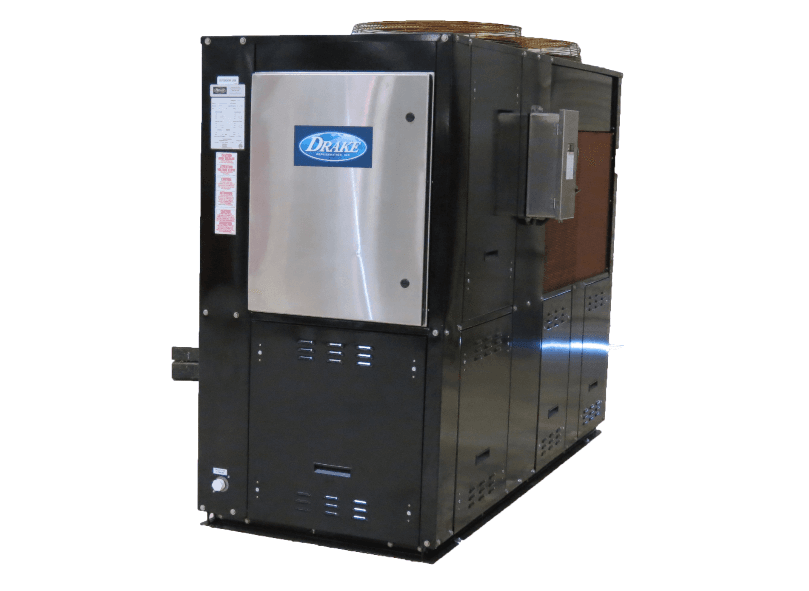
PACT48S
Large material equipment
chiller

With over 50 years of experience designing and building process chillers for industrial applications, we help keep your equipment cool even in the heat of production. Our industrial chillers come as a complete packaged unit that can simply be dropped in place and turned on. The internal tank helps maintain a cold-water temperature to ±1°F to prevent temperature spikes, no matter how many processes are operating. You can count on us to build reliable and custom solutions for every industrial process cooling application. Our chillers take the heat, so you don’t have to!
Download our Industrial Chillers Brochure
Our industrial chillers use process cooling to draw heat away from your equipment during production. They are ideal for a variety of industries and applications, including:
Regardless of your industry and process, adequate process cooling is critical to your productivity and cost savings. Tell us about your application, and we’ll design a chiller for you.
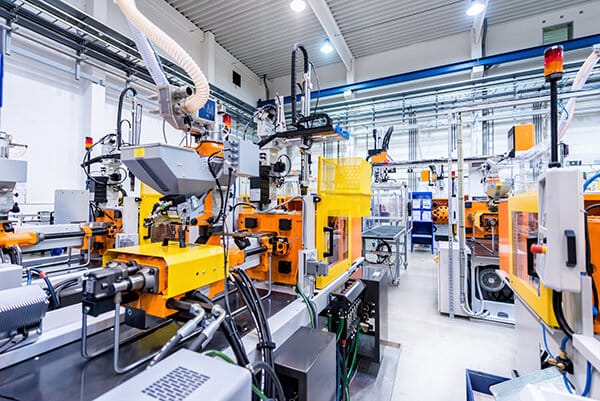
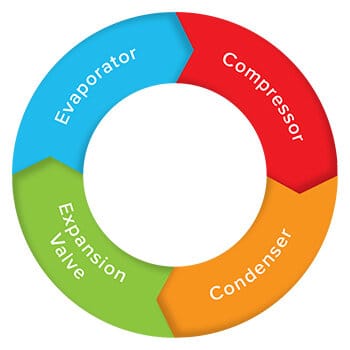
During production, industrial processes generate heat from friction, equipment, or burning. Our industrial chillers use process cooling to direct heat away from the equipment. They help maximize the lifetime of your components and keep your production moving. Process chillers are different than standard HVAC systems that you have in your home or office. A pumping system directs cool fluid from the chiller to your process to remove heat, and then returns the warm liquid to the chiller. By eliminating the heat using the process water, your equipment stays cool. Process industrial chillers have four main components, each playing a vital role in the cooling process:
Large material equipment
chiller
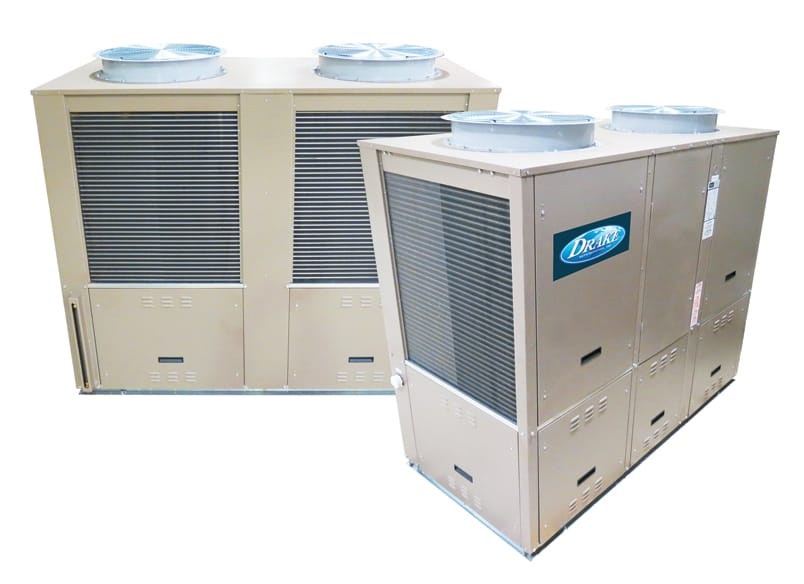
Industrial process
chiller
Oil cooling industrial
chiller
There are a couple of types of condensers available in industrial process chillers: air-cooled and water-cooled.
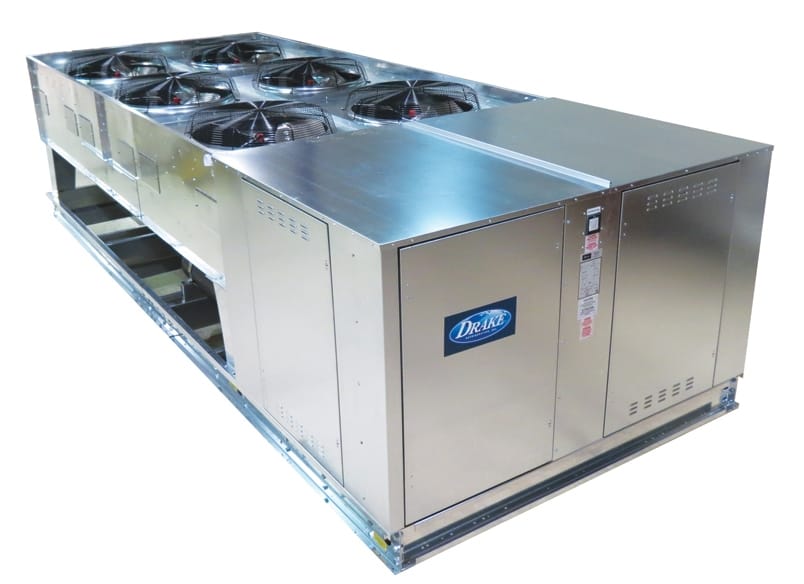
Air-cooled chillers work just as they sound. They use ambient air to cool the refrigerant to help keep your industrial processes running strong. Air-cooled chillers are stand-alone units and do not require any additional equipment to function.
Industrial water-cooled chillers use water in the chilling process. They have a separate cooling tower to remove heat from the refrigerant. Water-cooled units often take up less space than air-cooled units, even with the tower, but require access to a continual water source.
Our custom-capable product line includes an industrial-grade lineup of in-stock items available for quick shipment. You can also choose to partially or fully customize our chillers to meet your specifications.
We carry the following types of industrial chillers:
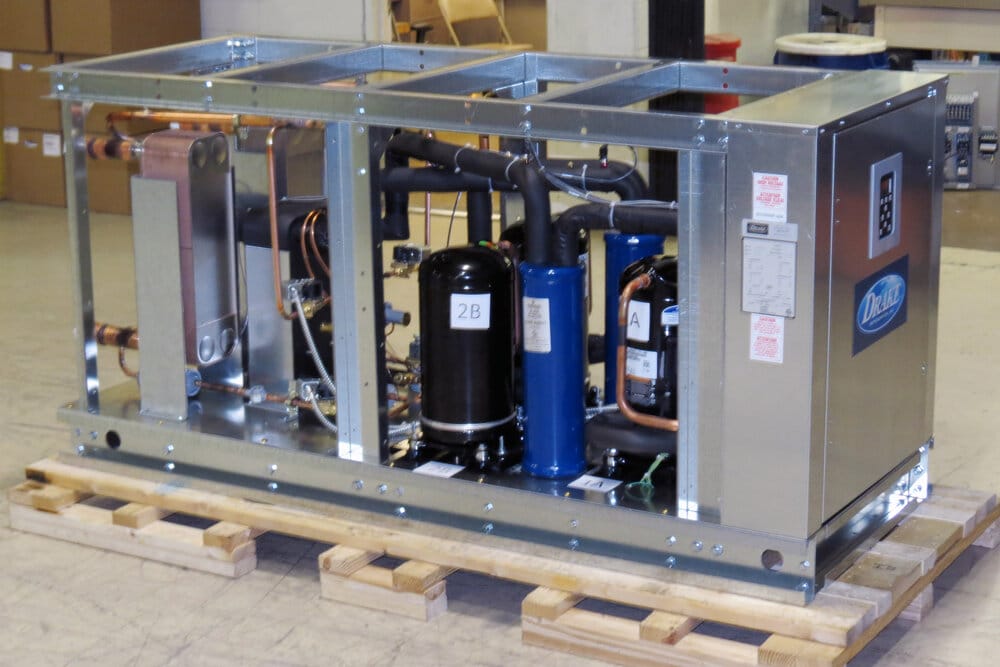
Available as an air- or water-cooled chiller, our scroll chillers come with compressors ranging from 2-34 HP. They use a set of interlocking scrolls to pressurize the refrigerant inside the compressor. Scroll chillers work well for small or single equipment cooling needs and are excellent for sporadic process applications that run less than 24 hours per day.
For larger industrial cooling and refrigeration applications, these air- or water-cooled industrial chillers can handle the job. Available in 25-100 HP compressor power, our semi-hermetic chillers come with many customization options to meet your project needs.
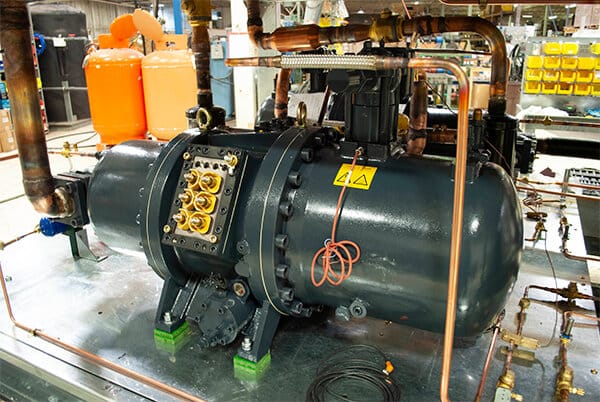
Screw industrial chillers leverage the movement and force of screws to compress refrigerant. They are versatile enough to handle light- or heavy-duty applications and are available between 38-214 HP compressor power.
Remote condenser systems allow you to place the condenser and compressor in separate areas. They are ideal for industrial process applications in corrosive environments and spaces with poor ventilation and heat issues.
Our tank and pump packages are available between 30-30,000 gallons. You may also choose between polyethylene or stainless-steel tanks, depending on your needs. Our industrial chiller experts can help you determine the best tank and pump package for you.
While we have in-stock items available, our industrial chillers are entirely customizable. If you require specific customization, our highly advanced engineering staff can design a unit based on your needs.
Our flexible redundancy customization options provide peace of mind that your equipment and processes stay cool. They include:
We offer several customization options for the heat exchanger and tank, including:
From ‘smart’ technology features to other customized control options, managing your industrial chiller system has never been easier with:
Beyond the customization options listed here, we have the design and engineering expertise to fabricate a unique industrial chiller tailored to your specific application.
Whether you require digital flow meters, circuit breakers for electrical components, corrosion resistance, or something else, contact us to learn more about our custom capabilities.

If your processes require specific temperatures, we have the expertise to engineer and fabricate an industrial chiller to meet your specifications. A few of our low-temp options include:
industrial chillers come with many control features that you can customize to meet your needs. A few factors to consider here include a local control panel, remote control panel, fault indicators, and temperature indicators and pressure indicators. Our advanced custom programming and the latest technological advancements give you access to control features, including:
Our industrial chillers use only EPA-approved refrigerants and the latest energy-efficient compressors. We also offer a city water bypass apparatus that operates without draining glycol. And for reduced energy consumption, look to our supplemental fluid coolers.
We can tailor our industrial chillers to meet virtually any budget and industrial need. We have in-stock items ready for quick shipment. These items can also be customized with only the features you want, saving you from overspending on a more advanced model than you need.
Additional industrial chiller considerations include:
Ambient temperature
Motor fan type
Noise level
Internal piping materials
Number of refrigeration circuits
Coolant requirements
Fluid discharge temperature
COP or EER